Holding Businesses Responsible for Injuries in Public Places
Public spaces are an integral part of our daily lives, serving as venues for shopping, dining, entertainment, and various activities. While we expect these places to be safe, accidents can still occur, leading to injuries. When such incidents transpire on commercial premises, it’s crucial to understand the legal aspects surrounding them, especially in a state like California with its unique laws and regulations. In this blog post, we will explore the legal framework for holding businesses accountable for injuries in public places, empowering you to know your rights and options if you’ve been injured in such circumstances.
I. Understanding Premises Liability
To comprehend the legal implications of injuries in public spaces, we need to delve into the concept of premises liability. Premises liability refers to the legal responsibility that property owners or occupiers have for injuries and accidents that occur on their property. In the context of businesses operating in public spaces, this principle is of utmost importance.
II. Types of Public Places
Public places can encompass a wide array of settings, including:
- Retail Stores: Grocery stores, department stores, boutiques, and more.
- Restaurants and Cafes: Dining establishments of all kinds.
- Entertainment Venues: Movie theaters, concert halls, and amusement parks.
- Public Transportation Hubs: Bus stations, train stations, and airports.
- Hotels and Lodging Facilities: Including motels, inns, and resorts.
- Parks and Recreational Areas: Public parks, playgrounds, and recreational facilities.
The common thread among these places is that they are open to the public and invite individuals to enter their premises for various purposes.
III. Legal Duty of Care
Under California law, businesses that open their doors to the public owe a duty of care to those who enter their premises. This duty entails maintaining the premises in a reasonably safe condition and taking necessary precautions to prevent injuries.
IV. Common Causes of Injuries in Public Places
Injuries in public spaces can arise from numerous factors, including:
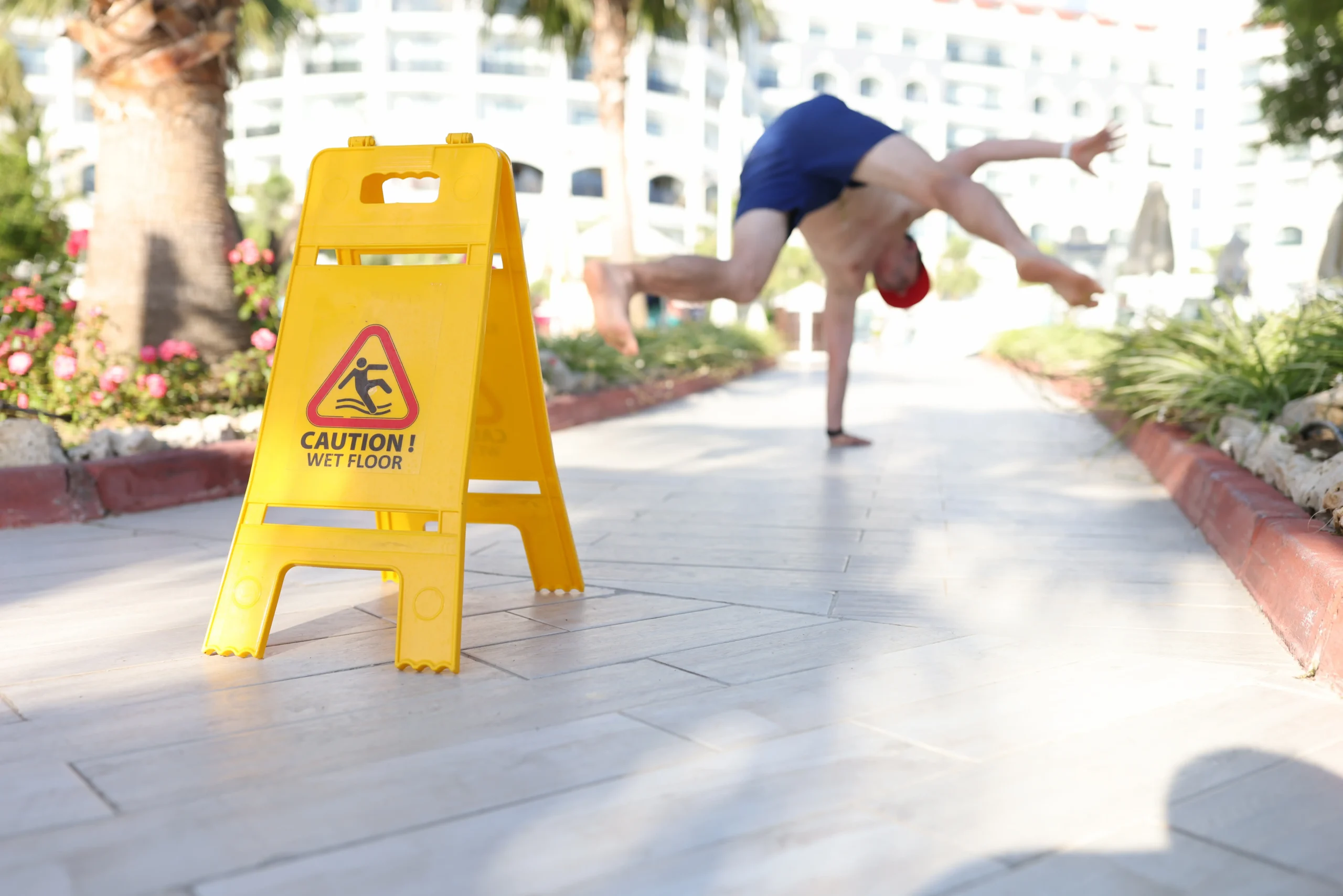
- Slip and Fall: Due to wet floors, uneven surfaces, or debris.
- Trip and Fall: Often caused by poorly maintained walkways or obstacles.
- Inadequate Lighting: Resulting in accidents in dimly lit areas.
- Negligent Security: Leading to assaults or thefts on the premises.
- Falling Objects: Merchandise or fixtures falling from shelves.
- Structural Hazards: Such as loose handrails or unstable staircases.
When these accidents occur, individuals can suffer a range of injuries, from minor bruises to severe fractures, concussions, or even life-altering disabilities.
V. Proving Liability
To hold a business responsible for injuries sustained on its premises, certain elements must be established:
- Duty of Care: Demonstrating that the business owed a duty of care to the injured party.
- Breach of Duty: Showing that the business failed to uphold its duty of care by acting negligently or recklessly.
- Causation: Establishing that the breach of duty directly caused the injury.
- Damages: Providing evidence of the injuries and losses suffered by the injured party as a result of the accident
VI. California's Comparative Negligence System
California follows a comparative negligence system, which means that if the injured party is found partially at fault for the accident, their compensation may be reduced accordingly. However, this also implies that as long as the injured party is not more than 50% at fault, they can still recover damages.
VII. Business Owners' Responsibilities
Business owners in California have several responsibilities to help prevent injuries on their premises:
- Regular Maintenance: Ensuring that the premises are regularly inspected and maintained.
- Cleaning and Repairs: Addressing any hazards promptly, such as spills, broken fixtures, or damaged flooring.
- Proper Signage: Placing warning signs where necessary to alert customers to potential dangers.
- Security Measures: Implementing appropriate security measures to deter criminal activity.
- Employee Training: Providing proper training to staff on safety protocols and customer assistance.
VIII. Negligence and Liability
When a business owner or operator fails to meet their responsibilities and negligence leads to an injury, they can be held liable. Negligence can take various forms, including:
- Failure to Warn: Not providing adequate warnings about potential hazards.
- Inadequate Security: Failing to provide sufficient security measures.
- Negligent Hiring: Hiring employees without proper background checks or training.
- Product Defects: Selling defective products that cause injuries.
IX. Premises Liability Claims
If you’ve been injured in a public place due to a business’s negligence, you may have grounds for a premises liability claim. Here are the steps to take:
- Seek Medical Attention: Your health is the top priority. Get medical treatment for your injuries as soon as possible. This also creates a record of your injuries.
- Report the Incident: Inform the business of the accident and ensure that it’s documented.
- Collect Evidence: Gather evidence related to the accident, including photographs, witness statements, and any available surveillance footage.
- Preserve Evidence: Keep any items or clothing involved in the accident as potential evidence.
- Consult an Attorney: Reach out to a personal injury attorney experienced in premises liability cases. They can assess the strength of your case and guide you through the legal process.
X. Business Defenses Against Liability
Businesses may employ various defenses to avoid liability, including:
- Lack of Notice: Claiming they were unaware of the hazard.
- Comparative Negligence: Arguing that the injured party’s actions contributed to the accident.
- Assumption of Risk: Contending that the injured party knew about the danger but chose to proceed anyway.
XI. Negotiating or Litigating
Once you file a premises liability claim, negotiations with the business’s insurance company may begin. If a fair settlement cannot be reached, you may proceed to litigation.
XII. Statute of Limitations in California
It’s essential to be aware of the statute of limitations for personal injury claims in California. Generally, you have two years from the date of the injury to file a lawsuit. Failing to do so within this timeframe could result in your claim being barred.
XIII. Conclusion
Injuries in public places due to business negligence can have severe physical, emotional, and financial consequences. Understanding your rights and the legal options available to you is crucial if you’ve been injured on commercial premises.
By holding businesses accountable for injuries that occur in public spaces, you not only seek compensation for your losses but also contribute to the promotion of safer environments for everyone. If you find yourself in such a situation, consult with experienced personal injury attorneys such as those at La Justicia Abogados who can guide you through the process of seeking justice and compensation for your injuries. Remember, your safety matters, and you have the right to expect it when visiting public places in California.
Recent Post
-
January 09, 2026Proving Fault After a Car Accident in Oxnard: Evidence That Makes or Breaks a Case
-
January 08, 2026Types of Civil Cases a Lawyer Can Handle in California
-

December 10, 2025Why Choosing a Local Hesperia Accident Attorney Can Improve Your Case Outcome
-
December 10, 2025From Whiplash to Spinal Cord Injury: Injuries in Bakersfield
-

November 11, 2025How Pre-Existing Conditions Affect Your Personal Injury Case: The Facts and Misconceptions
-

November 10, 2025Slip and Fall Injuries in Public Places: Who Is Liable?
-
October 02, 2025Why Delaying Medical Care Can Destroy Your Personal Injury Claim
-
October 01, 2025Highway Crash Claims in Bakersfield: What Residents Should Know